viernes, 1 de noviembre de 2019

Durvalumab Plus Chemo Improves Survival for Small Cell Lung Cancer - National Cancer Institute

Durvalumab Plus Chemo Improves Survival for Small Cell Lung Cancer - National Cancer Institute

National Cancer Institute


Durvalumab Plus Chemotherapy Improves Survival in Small Cell Lung Cancer


, by NCI Staff
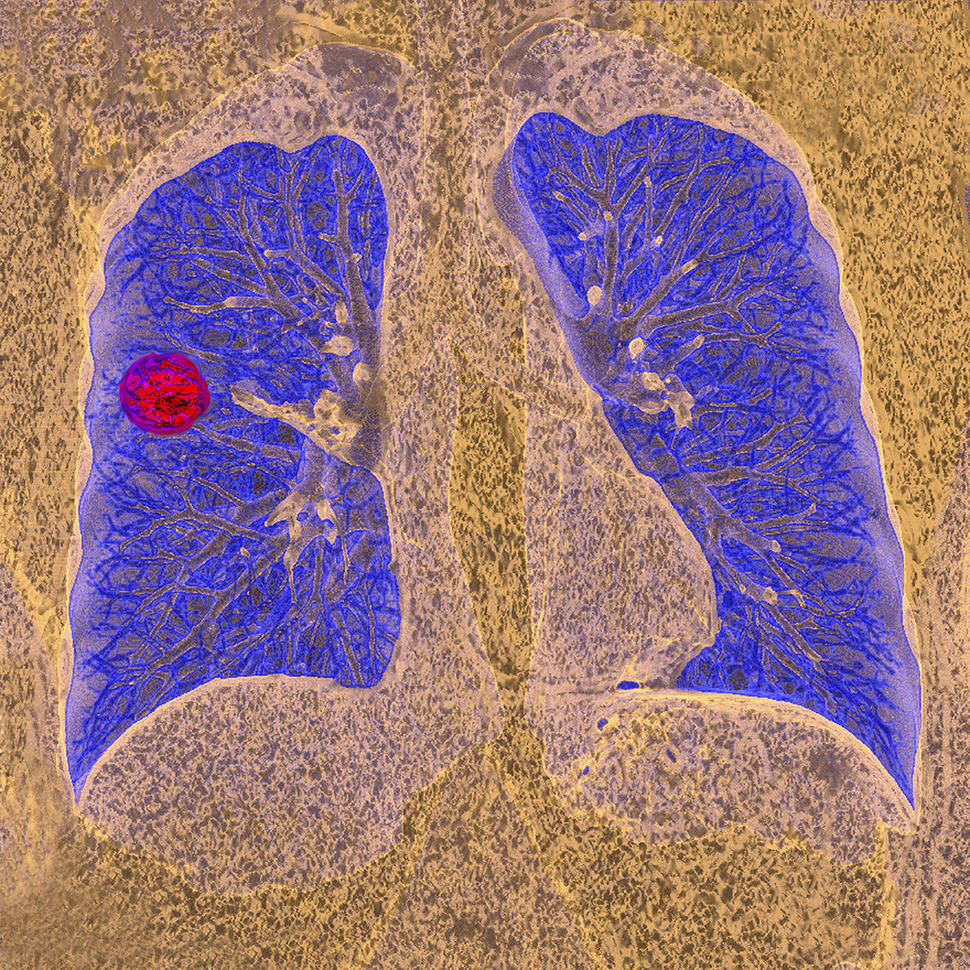
A CT scan of a person with lung cancer.
Results from a new clinical trial show that adding the immunotherapy drug durvalumab (Imfinzi) to chemotherapy can improve how long some people with small cell lung cancer live.
Credit: iStock
New results from a large clinical trial show that the immunotherapy drug durvalumab (Imfinzi) can prolong survival in some people with advanced small cell lung cancer (SCLC). In the study, treatment with durvalumab combined with a standard chemotherapy regimen increased overall survival in patients with newly diagnosed advanced SCLC by approximately 3 months compared with those treated with standard chemotherapy alone.
Although the improvement in survival with immunotherapy was modest, it is noteworthy because SCLC has been such a recalcitrant disease, said Anna Farago, M.D., Ph.D., a lung cancer specialist at Massachusetts General Hospital Cancer Center, who was not involved in the trial. 
“We now have two studies that show there is a benefit to adding immunotherapy to chemotherapy for patients with previously untreated SCLC,” Dr. Farago said. 
In March 2019, the Food and Drug Administration approved the immunotherapy drug atezolizumab (Tecentriq) in combination with standard chemotherapy for the initial treatment of advanced SCLC, based on results from a trial reported in September 2018. Results from the study testing durvalumab, known as the CASPIAN trial, align with those earlier results. Both drugs are a type of immunotherapy known as immune checkpoint inhibitors.
The CASPIAN trial results were presented in September at the World Conference on Lung Cancer (WCLC) in Barcelona, Spain, and published October 4 in The Lancet.
“CASPIAN underlines the therapeutic value of chemoimmunotherapy in patients with [advanced] SCLC as a new standard of care,” wrote Thorsten Oliver Goetze, M.D., of the Institute of Clinical Cancer Research in Frankfurt, Germany, in an accompanying editorial.
The trial also “raises further questions” for future clinical trials to answer, Dr. Goetze added, including how best to use chemotherapy in combination with checkpoint inhibitors.

Lung Cancer that Tends to Come Back and Spread Early

SCLC is a particularly aggressive form of lung cancer. About two-thirds of people diagnosed with SCLC, which accounts for about 15% of all lung cancers, have advanced disease, and the outlook for these patients is poor.
“SCLC tends to metastasize, or spread, earlier and behave more aggressively than non-small cell lung cancer (NSCLC), though we see a range [of behaviors] with each of these cancer types,” Dr. Farago said.
Anywhere from 50% to 70% of patients with SCLC respond to initial chemotherapy, she continued. “Unfortunately, this type of lung cancer tends to come back, and, when it does come back, it tends to be less sensitive to subsequent chemotherapy,” she said.
And although many other studies have tried to improve upon standard treatments for SCLC, until recently treatment of this cancer had not changed in the last 20–30 years, Dr. Farago added.
CASPIAN, which is being conducted at 209 sites across 23 countries, was funded by AstraZeneca, the maker of durvalumab. 
Durvalumab is already being used as standard therapy for patients with advanced NSCLC. 
All 805 patients in the CASPIAN trial had advanced SCLC. Of these, 268 were randomly assigned to durvalumab plus standard chemotherapy (the drug etoposide plus either carboplatin or cisplatin) and 269 were randomly assigned to standard chemotherapy alone (the control group). 
Another 268 patients were randomly assigned to durvalumab plus a second immune checkpoint inhibitor, tremelimumab, in addition to standard chemotherapy. 
The planned interim analysis of CASPIAN reported at the WCLC and published in The Lancet, which included data from the durvalumab and control groups only, showed that patients receiving durvalumab in addition to standard chemotherapy lived longer overall after random assignment: a median of 13.0 months versus 10.3 months.
Another, perhaps more useful, way of looking at the data, Dr. Farago said, is that 1 year after patients were randomly assigned to the different treatments, 54% of patients in the durvalumab group were still alive, versus only 40% of those in the control group. And at 18 months, 34% and 25% of patients remained alive in the durvalumab and control groups, respectively.
“Importantly…the same magnitude of [survival] benefit was seen across all groups of patients, including those with brain metastases,” said the trial’s lead investigator, Luis Paz-Ares, M.D., Ph.D., of Hospital Universitario 12 de Octubre in Madrid, Spain, at a WCLC news conference.
An equal number of patients in both groups (62%) experienced severe side effects, such as pneumonia, anemia, and reduced levels of infection-fighting white blood cells. And in both groups, 9% of patients stopped treatment due to serious side effects. 
“The main difference was in the incidence of immune-related adverse events, as was anticipated,” Dr. Paz-Ares said. People in the durvalumab group experienced more immune-related side effects, including thyroid problems.
Nevertheless, 87% and 85% of patients, respectively in the two groups completed four cycles of chemotherapy. Adverse effects leading to death occurred in 5% of patients in the durvalumab group and 6% in the control group.

Hope for Further Improvement

Some questions remain, Dr. Goetze wrote in the editorial, including: How many cycles of conventional chemotherapy are needed in combination with immune checkpoint inhibitor therapy? And what is the role of radiation therapy in preventing the spread of SCLC to the brain?
And, as in any clinical trial, Dr. Farago noted, patients had to meet certain criteria to be included in CASPIAN, “so this treatment combination may not be right for every patient.”
“Further study to identify patients with SCLC who might derive long-term survival benefit [from durvalumab] is warranted,” Dr. Paz-Ares and his coauthors wrote.
“There is a lot of room for improvement in the treatment of SCLC, and we hope to see further improvement in patient outcomes with clinical trial strategies that are coming through the pipeline,” Dr. Farago said.
To accelerate progress against this aggressive and recalcitrant disease, in 2017 NCI established the Small Cell Lung Cancer Consortium. The consortium brings together SCLC experts, including Dr. Farago, from institutions across the United States.
Investigators are continuing to follow patients in the CASPIAN trial, including patients in the third treatment group, for whom results have not yet been reported.

NUEVO CURSO VIRTUAL Ecografía Neonatal y Pediátrica - de lo básico a los últimos avances


Auspiciado por la Sociedad Latinoamericana de Radiología Pediátrica SLARP y The World 


Federation of Pediatric Imaging WFP


ECOGRAFÍA NEONATAL Y PEDIÁTRICA


De lo básico a los últimos avances - On Line
 

400 horas académicas con examen final

DIRECTORAS: Dra. Silvia M. Moguillansky - Dra. Maria M. Tombesi

DIRIGIDO A: Pediatras y especialidades pediátricas. Radiólogos. Ecografistas, Residentes y Becarios.

CONTENIDOS:
Introducción
US Doppler
Transfontanelar
Ecografía y neurodesarrollo: Nuevos desafíos
Medula Espinal
Ocular
Imágenes en patología regional del NEA
Hidatidosis, nuevo enfoque
Cuello 1: Lesiones de partes Blandas
Cuello 2: Tiroides y Glándulas salivares
Utilidad en el Tórax
Uñas y Piel, un nuevo desafío.
Ecografía Deportiva
Caderas
Artritis Idiopática Juvenil
Anomalías vasculares en Pediatría
Tubo Digestivo
Deteniéndonos en el Intestino Delgado
Enteritis necrotizante
Dilataciones del tracto Urinario detectadas intraútero. Desafíos actuales
Nefropatías
Tumores Retroperitoneales
Lesiones ecográficas cuando hacer RMI - Ventajas y Desventajas
Patología Hepática
Rol de la Ecografía en el tratamiento de la Hipertensión portal
Elastografía
Glándulas Mamarias
Ginecología
Testículo
Intervencionismo Guiado por Ultrasonido
Presentación de casos Interesantes 1
Presentación de casos Interesantes 2


INFORMES E INSCRIPCIÓN:

Cholesterol and heart disease: The role of diet

HEALTHbeat

Harvard Medical School

Cholesterol and heart disease: The role of diet

Your diet clearly plays a role in determining your cholesterol levels, but if you're like most people, the most important factor isn't how much cholesterol-rich food you eat. Rather, it's what else you eat. Figuring this out has been a learning process.
Initially, the news that cholesterol in the bloodstream was linked to heart disease prompted an all-out war on cholesterol in food. From the 1960s on, people were advised to stay away from foods rich in cholesterol, like eggs, dairy foods, and some types of seafood. But today, the science suggests that, for most people, dietary cholesterol (the cholesterol in foods) has only a modest effect on the amount of cholesterol in the bloodstream. In fact, the 2015–2020 Dietary Guidelines for Americans eliminated an earlier recommendation to limit dietary cholesterol to 300 milligrams (mg) per day—although they still suggest caution on overall intake.
Get your copy of Managing Your Cholesterol
 
Managing 
Your Cholesterol
Managing Your Cholesterol offers up-to-date information to help you or a loved one keep cholesterol in check. The report spells out what are healthy and unhealthy cholesterol levels, and offers specific ways to keep cholesterol in line. It covers cholesterol tests and the genetics of cholesterol. The report also focuses on treatments based on the latest scientific evidence, including the pros and cons of statins and other medications, and provides the lowdown on other substances advertised to lower cholesterol. Managing Your Cholesterol can also help you work with your doctor to individualize your treatment.

Read More
Notably, the guidelines did not change the recommendation on saturated fat, which is found mainly in animal-based foods such as meat and dairy—and is often found in high-cholesterol foods. Saturated fat in the diet clearly does raise LDL by a significant amount and should still be consumed in limited quantities. And although some research has cast doubt on the conventional wisdom that saturated fat is linked with heart disease, other research upholds the link.

Foods high in fiber, low in saturated fat can lower cholesterol

While saturated fat and dietary cholesterol both play a role in your cholesterol level, experts stress that the most important dietary change you can make to lower your cholesterol numbers is to adjust the overall pattern of your diet. Best is a diet rich in fruits, vegetables, fish, and whole grains. This helps in two ways. First, the more of these healthful foods you eat, the less you generally consume of foods that are high in saturated fat and highly refined carbohydrates, which both damage the cardiovascular system. Second, high-fiber foods help reduce your cholesterol level by making unhealthy dietary fats harder to absorb from the gut.
This doesn't work for everyone, however. For people at high risk of heart disease, dietary efforts don't come close to lowering cholesterol enough. Other people are genetically predisposed to having high blood cholesterol regardless of what they eat.
To learn more about cholesterol and heart disease, read Managing Your Cholesterol, a Special Health Report from Harvard Medical School.
Share this story:
Share on FacebookShare on Twitter

Cholesterol-lowering medications: PCSK9 inhibitors

In the summer of 2015, the FDA approved two new cholesterol- lowering drugs, alirocumab (Praluent) and evolocumab (Repatha). They belong to a novel category of medications called PCSK9 inhibitors.
To understand what these drugs are and how they work, it's helpful to know a little bit about PCSK9 and why you might want to inhibit it. PCSK9 is a protein that targets and breaks down a certain class of receptors in the liver. Those receptors remove LDL from the blood as it passes through the liver. By reducing the number of these receptors, PCSK9 effectively increases the level of LDL in the blood. Studies have shown that people with excess PCSK9 have higher LDL and tend to suffer early heart disease, while those who are lacking PCSK9 (either entirely or partially) have low LDL and less heart disease.
That's where the PCSK9 inhibitors come in. By hampering PCSK9's ability to work, they allow more LDL receptors to remain in the liver—and with more receptors available to sweep away LDL, a person's blood levels of LDL plummet.

What the drug trials revealed

Three trials published in The New England Journal of Medicine demonstrated the LDL lowering ability of these new drugs, which are given by injection under the skin. In all three trials, all of the participants took a statin to lower cholesterol. In addition, half were given a PCSK9 inhibitor (either evolocumab or alirocumab) by injection every two to four weeks; the other half got a dummy injection (placebo). After a year, LDL levels were 40% to 60% lower in the PCSK9-inhibitor groups. In those treated with evolocumab, the average LDL after one year of treatment was 48 milligrams per deciliter (mg/dL), the lowest LDL ever seen in the experimental arm of a cholesterol-lowering trial. Some participants' LDL levels even fell below 25 mg/dL—arguably lower than needed. But both PCSK9 inhibitors have similar effects.
To learn more about cholesterol and heart disease, read Managing Your Cholesterol, a Special Health Report from Harvard Medical School.
Share this story:
Share on FacebookShare on Twitter

Featured in this issue


Read More

Managing Your Cholesterol

Featured content:


Cholesterol: Good, bad, and indifferent
Cholesterol and heart disease
Understanding your cardiovascular risk
Why treat cholesterol?
Your cholesterol test
Making sense of the statin guidelines
Special Section: Lifestyle changes to improve your lipid levels

Click here to read more »

Supercharge your cold and flu defenses


Harvard Health Publications

From Harvard Medical School

27 surprising secrets, smart strategies, and simple steps to supercharge your cold and flu defenses!

Here’s how to have more security and less worry this cold and flu season.

Cold and Flu
Read More
In Cold and Flu you’ll find...
the number one way that cold and flu germs are spread
how to keep your immune system strong
two new flu vaccines designed for people over 65
if it’s not a cold or flu, what else could it be?
non-medical ways to treat colds and the flu
one of the best ways to avoid getting sick—in just 6 steps!
Dear CERASALE,
Your co-worker coughs. Your spouse sniffles. And you think, here we go again! I’m going to catch it. I’m next.
Not so! This Harvard Medical School Guide shares practical and effective ways to prevent colds and flu this year. You’ll discover steps that can greatly lower your risk and advances that can dramatically ease aches and misery.
This season, leave the red nose to Rudolph!
Would you like colds and flu to skip your house for a change? This downloadable guide will show you how to pull up the welcome mat.
You’ll discover both common sense tips and surprising steps to avoid getting or spreading cold germs. You’ll learn about breakthroughs in flu prevention. And you’ll find practical and proven strategies for keeping your immune system at its cold-and-flu-fighting best.
O.K., so what’s “bugging” you?
A cold and the flu are both caused by viruses. These viruses propel germs into the air or onto surfaces. The guide will alert you to both obvious and overlooked points of contact. (Be careful with that remote!) You’ll learn when others are most contagious. (It’s sooner than you think.) And you’ll find out why colds occur so much more often in winter. (It’s not just the temperature.)
You’ll learn the preventive measures that make a difference.
There are easy ways to make it hard on germs. You’ll learn how to avoid a common hand washing mistake many people make. You’ll read whether hand sanitizers are any better than soap. You’ll be briefed on ways to help children reduce their chances of catching a cold. You’ll find heartening news about two new choices in flu vaccines…and how Tamiflu, Relenza, and Rapivab compare for flu prevention.
You’ll discover treatments that will have you breathing easier.
You can’t cure a cold, but you can relieve the symptoms. In this guide, you’ll discover today’s most effective and safest cold and flu remedies. You’ll get the surprising facts about vitamin C. You’ll read about a lozenge supplement that’s been shown to reduce the duration of a cold…and much more!
No one wants a cold or the flu. Get your copy of this fact-packed guide today!
Read More
To your good health,
Howard E. LeWine, M.D.
Chief Medical Editor, Harvard Health Publishing

Key reagents for your neurodegeneration research

Abcam


Conformation-specific amyloid beta antibodies
Explore our range of rabbit monoclonal antibodies against Aß 1–42 fibrils that can distinguish conformational variation in amyloid structures.
 
Find your product
 
 
Amyloid beta
 
 
Purple neurons
Active alpha-synuclein proteins
Induce Lewy body pathology in neurons with active alpha-synuclein protein aggregates and monomers. Suitable for in vitro and in vivo experiments.
 
Take a look
 
 
Purple tau
Five-star rated Tau antibody
Our monoclonal Tau antibody is rated five stars by our customers and cited in papers from top journals including Nature Medicine.
 
See datasheet